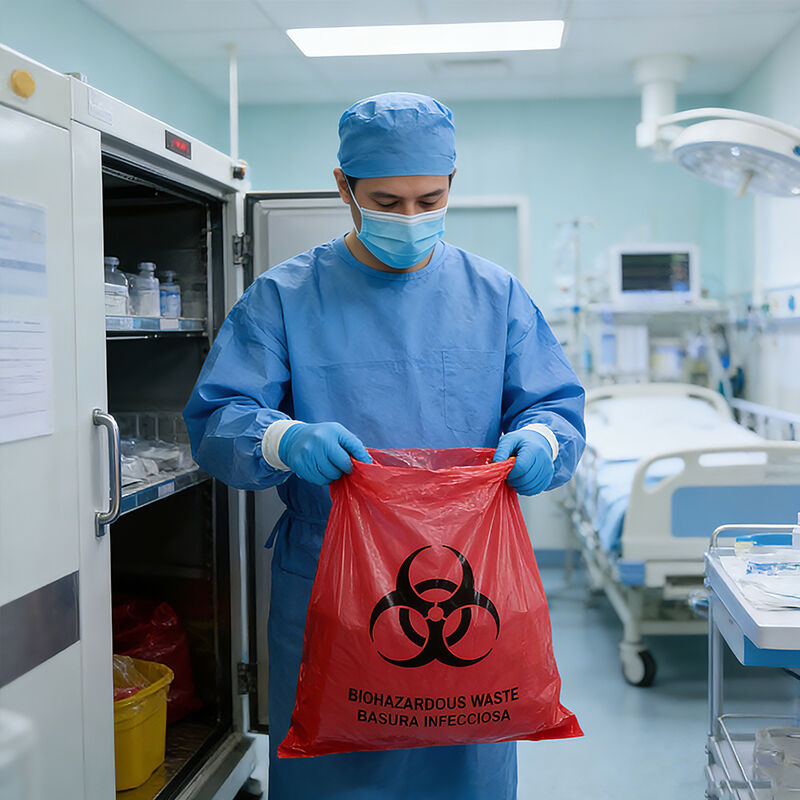
Red High-Temperature Autoclavable Biohazard Bags (131°C / 268°F)
A high-density polypropylene (PP) infectious waste disposal solution engineered for high-temperature steam autoclave sterilization up to 131°C (268°F). Designed with elevated puncture resistance, reinforced bottom heat seals, and clear biohazard warning graphics for medical waste management.
1. Product Overview & Technical Specifications
| Specification Item | Details / Baseline Standard |
|---|
| Product Name | Autoclavable Red Biohazard Waste Bag |
| Material Formulation | High-Temperature Polypropylene (PP) Resin |
| Standard Dimensions (W x L) | 61 x 81 cm (24 x 32 in) |
| Nominal Volume Capacity | Approx. 12 - 15 Gallons (45 - 55 Liters) |
| Gauge / Thickness Range | 0.030 - 0.040 mm (30 - 40 microns / approx. 1.2 - 1.6 mil) |
| Thermal Rating | Rated up to 131°C (268°F) under standard autoclave parameters |
| Film Color | High-Visibility Medical Red (Custom shades available) |
| Standard Printing | 1-Color Gravure Print (Universal Biohazard Symbol & Warnings) |
| Optional Indicator Feature | Temperature-Sensitive Autoclave Indicator Label (Changes color post-steam cycle) |
| Bottom Seal Type | Reinforced leak-resistant bottom heat seal |
2. Primary Application Scenarios
| Application Scenario | Usage Details |
|---|
| Hospitals & Surgical Centers | Collection and steam sterilization of infectious medical waste, contaminated linens, and surgical consumables. |
| Clinical Laboratories & Research Facilities | Containment of biological cultures, cell media, and contaminated labware prior to disposal. |
| Dental & Veterinary Clinics | Waste handling for regulated healthcare sanitation workflows. |
| Pharmaceutical Manufacturing | Disposal of bio-contaminated materials within controlled facility environments. |
3. Customer Challenges & Testing Standards
To support compliance with medical waste disposal protocols, every production lot is manufactured under defined physical QC testing standards:
Addressing End-User Challenges
High-Temperature Softening & Film Attachment:
The Challenge: Standard PE bags soften or fuse together during autoclave cycles, complicating waste handling.
Our Solution: Formulated with heat-stabilized Polypropylene (PP) resin designed to maintain structural integrity during standard steam cycles up to 131°C (268°F).
Puncture & Tear Risks from Labware:
The Challenge: Rigid pipettes, culture tubes, or sharp packaging damaging thin films during handling.
Our Solution: Processed for enhanced dart-impact and tear resistance under standard loading conditions.
Moisture & Condensate Seepage:
The Challenge: Condensate or fluids leaking through bottom seams during steam processing.
Our Solution: Temperature-calibrated bottom heat seals engineered to hold integrity under typical thermal and moisture exposure.
Verification of Sterilization Exposure:
The Challenge: Visual identification of waste batches that have completed a heat sterilization cycle.
Our Solution: Optional thermochromic indicator strips that undergo a distinct color transition upon reaching target sterilization temperatures.
Quality Control & Physical Testing Standards
Autoclave Thermal Resistance Test:
Sample bags are evaluated in standard steam autoclave conditions at 131°C for up to 30 minutes. Pass standard: No film melt-through or functional seam separation under normal loading.
Dart Drop Impact Test:
Evaluated for puncture and impact resistance against common rigid laboratory consumables.
Hydrostatic Integrity Test:
Sealed bags undergo liquid containment testing to verify seam strength before batch release.
4. Frequently Asked Questions (FAQ)
Q1: How does the optional high-temperature indicator label work?
A: The temperature-sensitive label incorporates thermochromic ink. When exposed to target steam sterilization temperatures (approx. 121°C–131°C), the indicator strip changes color (e.g., from light to dark), offering a quick visual reference for facility personnel.
Q2: Can we test physical samples for equipment compatibility before mass production?
A: Yes. We strongly recommend testing unprinted stock samples (61 x 81 cm in 30–40 micron gauges) in your specific autoclave machinery and waste protocols prior to placing a full production order.
Q3: What artwork requirements apply for custom warning prints?
A: Standard orders include universal Biohazard symbols and multi-language warning text. For facility-specific text or regulatory updates, please provide artwork in vector PDF or AI format. Digital proofs are provided for customer approval before plate engraving.
Q4: How should bags be loaded into the autoclave to prevent bursting?
A: Bags should be gathered loosely (or secured with steam-permeable autoclave ties) rather than sealed airtight. This allows steam to penetrate effectively and balances internal pressure during the heating cycle.


 Your message must be between 20-3,000 characters!